
Hey, I'm James with Local Tire and Wheel. Twenty-five years in this business, give or take.
Today's one is called "What The Numbers On Your Sidewall Actually Say." And I promise this is more interesting than it sounds. Little bit more interesting, anyway.
Alright. Here we go.
So there's a sentence written on the side of your tire. Right there. Plain daylight. Every single day.
And almost nobody can read it.
Takes about four minutes to learn. And after that? Nobody talks you into the wrong tire ever again.
If you can, go stand out by your car for this one. It's a lot more fun when you're actually looking at the thing.
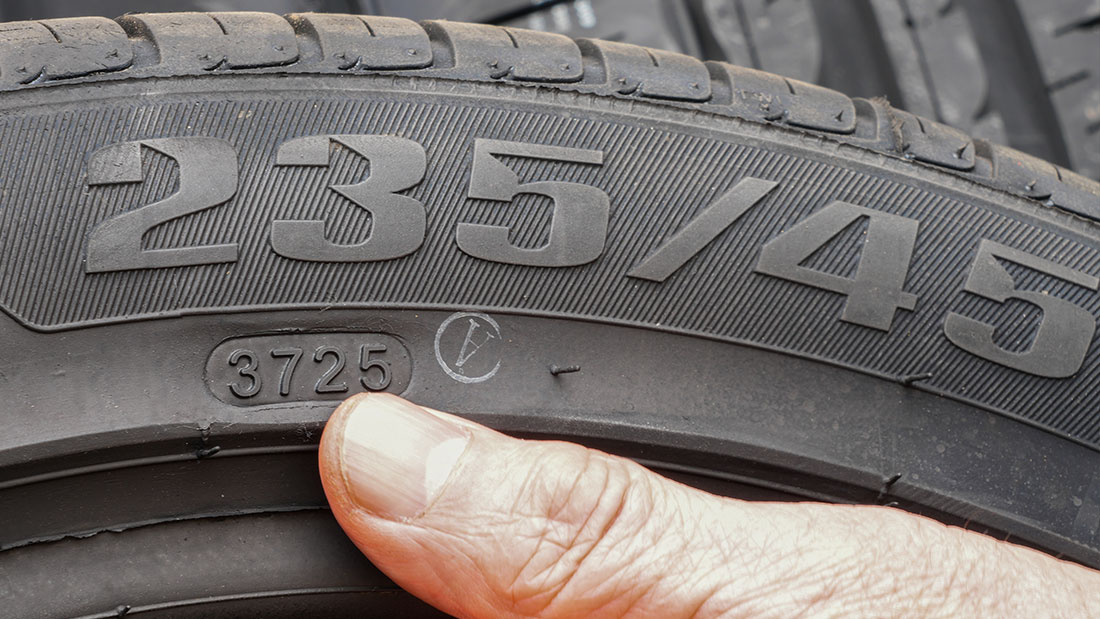
Okay. Find the biggest cluster of numbers on that sidewall. Something like... two twenty-five, sixty-five, R seventeen. Three pieces. And none of 'em are trying to trick you.
First number — two twenty-five — that's how wide the tire is. In millimeters. Tread edge to tread edge. Bigger number, wider tire. Easy enough.
Second number. Sixty-five. Now this is the one nobody guesses right.
It's not inches. It's a... it's a percentage. The sidewall height is sixty-five percent of the width.
So a forty-five? Short, stubby little sidewall. A seventy is a tall one. And that one number right there is most of the reason one truck rides like a living room couch and the next one rattles your fillings loose.
The R just means radial. Everything on the road's radial. Don't lose any sleep over it.
Seventeen is your wheel diameter. Inches. And that one's gotta match. No wiggle room, no negotiating.
Now. Right after all that, there's a two-digit number and a letter. Ninety-five H, something like that.
And that's the part that actually matters for safety. Which is, uh... which is exactly the part everybody's eyes slide right past.
The number's the load index. How much weight that one tire can carry. If you tow, if you haul, if you've got a three-quarter ton — that number is not optional.
Somebody who puts a passenger-car load rating on a work truck has done you real harm. And it'll look perfectly fine sitting there in the parking lot. That's the trouble with it.
The letter's the speed rating. Less about how fast you drive, more about how that tire handles heat over a long haul.
Oh — one more thing while you're down there.
There's a pressure number on the sidewall too. And that is not the pressure you're supposed to run. That's the maximum the tire can hold.
Your actual number lives on a sticker inside the driver's door jamb. Open the door and look.
Those two are almost never the same. And there are good, careful people out there who've been airing up to the wrong one for years and years.
So put your size in your phone. Width, aspect ratio, wheel size, load index, speed rating.
Next time somebody quotes you a price, you'll know whether they're quoting the same tire — or something cheaper that just happens to fit.
That's the whole trick. The tire already told you. You just needed the language.
Alright, that's it for today.
Thanks for listening. Hope that one sticks with you next time you're standing in a tire shop. And if you want somebody to walk through it with you, come see us — eight stores across Arkansas, and we'll read it right off the sidewall with you.
We're local. It's in the name.
See you next time.
We're local. It's in the name.
Eight stores across Arkansas — come see us.